5 Proven Ways to Reduce Energy Consumption on Your Tape Extrusion Line
 Sep 09,2026

1. Optimise Screw Design for Better Plasticising Efficiency
The screw is the heart of the extruder. A longer L/D ratio (e.g. 33:1) provides more thorough melting and mixing, resulting in a more stable melt and lower pressure fluctuations – which directly reduces the load on the drive motor. Using 38CrMoALA alloy steel with nitriding not only extends screw life but also maintains consistent plasticising performance over time. NanYi’s European‑designed screws, with a 33:1 L/D ratio, allow speeds up to 450 m/min while consuming significantly less energy than conventional screws.
2. Adopt Inverter Tension Control to Match Load Precisely
Traditional winders and pull‑rolls often run at fixed power, wasting energy. Inverter‑driven tension control adjusts motor speed in real time to match the actual load. In the haul‑off and winding sections, the system automatically reduces power when tension is low, avoiding unnecessary high‑speed idle running. This not only cuts power use but also ensures consistent tape quality – no breaks and neat winding.
3. Upgrade Heating and Insulation Systems to Minimise Heat Loss
Heating is the largest consumer of electricity on an extruder. Traditional resistance heaters are inefficient, with much of the heat lost to the surroundings. Upgrading to ceramic or electromagnetic heaters, combined with high‑quality insulation layers, can improve heating efficiency by over 20%. Zoned temperature control with ±0.5°C accuracy further prevents overheating, saving energy while maintaining tape quality.
4. Install a Melt Metering Pump to Stabilise Extruder Pressure
A melt pump placed between the extruder and the die actively conveys melt, smoothing out pressure variations. With stable pressure, the screw speed becomes more constant, the motor load evens out, and overall energy consumption drops. In addition, a melt pump ensures consistent tape thickness and grammage – essential for high‑end food packaging bags. NanYi’s high‑speed tape lines can be equipped with a melt pump for both energy savings and quality improvement.
5. Recover Waste Heat for a Circular Energy System
Tape lines generate substantial waste heat, especially from cooling water and barrel surfaces. By installing heat exchangers, this heat can be recovered to pre‑heat raw materials, warm the factory, or even heat water for cleaning. Some advanced lines achieve closed‑loop heat reuse, cutting total plant energy demand by 10‑15%.
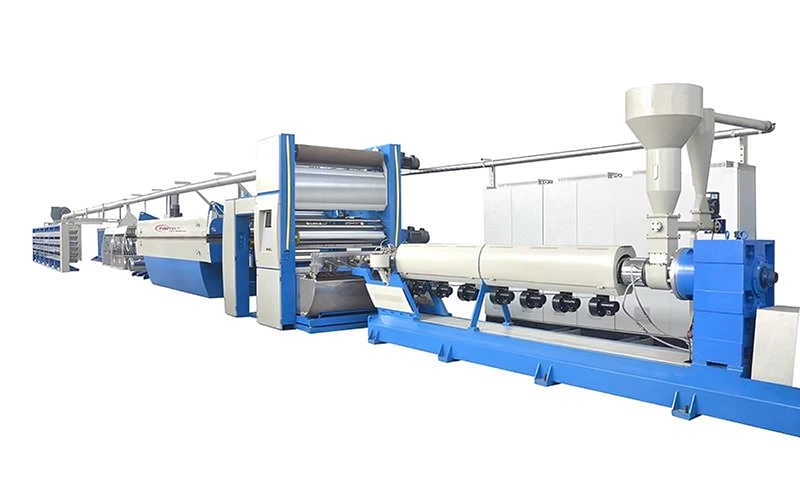
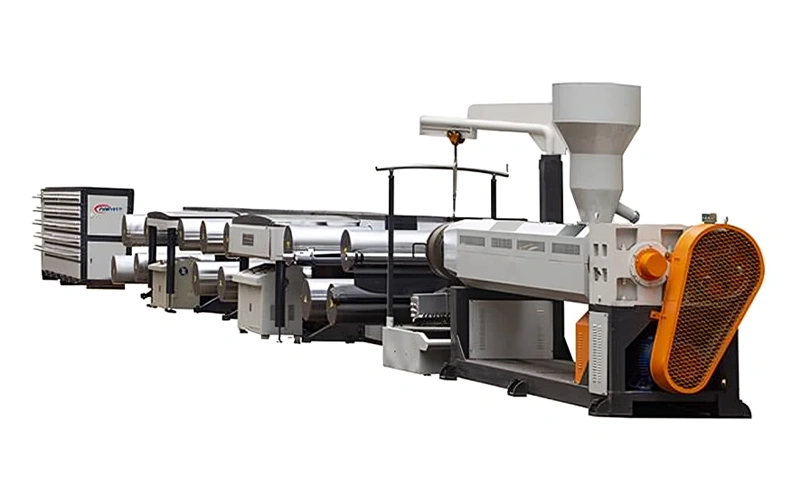
By combining these five methods, woven bag plants can significantly reduce the energy footprint of their tape extrusion lines. NanYi’s medium‑speed tape lines already operate at 0.25‑0.28 kWh/kg – far below the industry average of 0.4‑0.6 kWh/kg. Choosing high‑efficiency equipment is not only a cost‑saving measure; it is a step towards sustainable production.