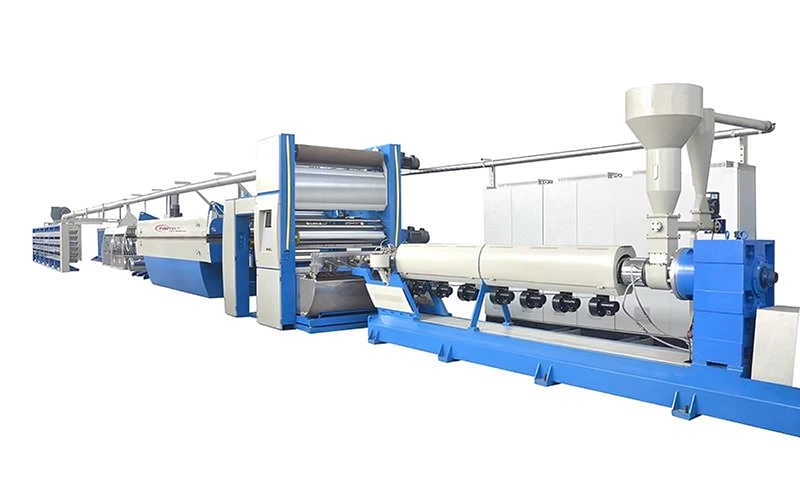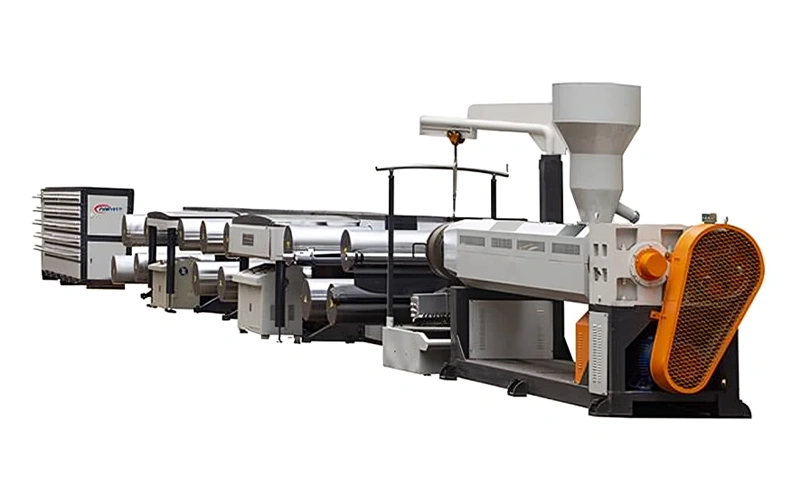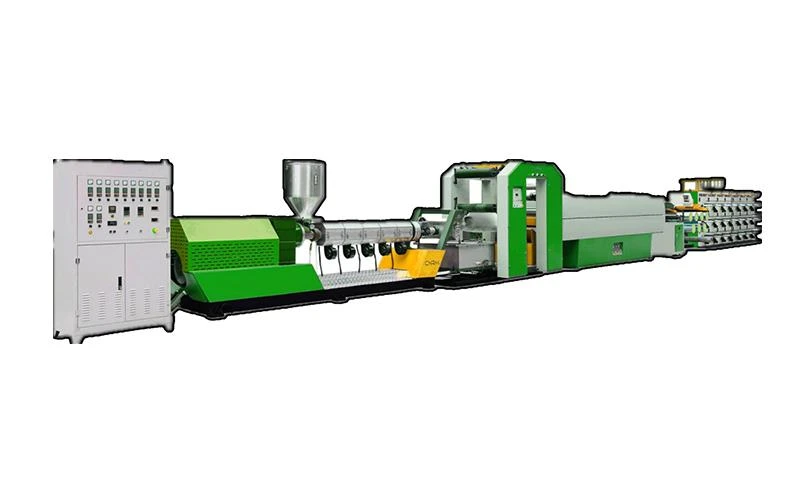
PP Woven Bag Production Line: Process, Equipment and Configuration
 Nov 10,2026

A PP woven bag production line consists of several interconnected manufacturing processes, including plastic tape extrusion, circular weaving, optional fabric lamination, and bag conversion. Each process serves a different production purpose, from preparing polypropylene tapes and weaving fabric to converting woven rolls into finished bags.
The equipment configuration depends on the required bag structure, material specifications, production capacity, and finishing requirements. Manufacturers can select individual machines or combine multiple processing stages according to their production plans, rather than adopting one fixed configuration for every application.
This guide explains how PP woven bags are manufactured, what equipment is involved at each stage, and how to select a suitable production configuration for different bag types.
1. Understanding the PP Woven Bag Manufacturing Process
PP woven bags are manufactured by weaving polypropylene (PP) tapes into a fabric structure and subsequently converting the fabric into bags.
The manufacturing process generally follows five main stages:
-
Raw material preparation
-
PP tape extrusion
-
Circular weaving
-
Optional fabric lamination
-
Bag cutting, sewing, and conversion
Not every PP woven bag requires all five stages. For example, uncoated woven bags can proceed directly from weaving to bag conversion, while laminated bags require an additional coating or lamination process.
PP Woven Bag Production Process Flow
Raw Material → PP Tape Extrusion → Circular Weaving → Optional Lamination → Bag Conversion → Finished PP Woven Bags
| Production Stage | Main Equipment | Main Function |
|---|---|---|
| Raw material preparation | Material preparation equipment | Prepare PP raw materials and additives according to the required formulation |
| Tape extrusion | PP Tape Extrusion Line | Melt, extrude, stretch, and wind polypropylene tapes |
| Fabric weaving | Circular Loom | Weave PP tapes into tubular woven fabric |
| Fabric lamination | Plastic Laminating Machine | Apply a coating layer to woven fabric when required |
| Bag conversion | Plastic Bag Conversion Machine | Cut, sew, seal, and convert fabric into finished bags |
| Supporting operations | Auxiliary Machines | Support material handling, winding, unwinding, and other production operations |
The production stages should be selected according to the final bag specifications. A manufacturer producing standard woven sacks may not need lamination equipment, while a producer making moisture-resistant packaging may require an additional coating process.
2. Main Equipment in a PP Woven Bag Production Line
Each machine performs a specific function within the manufacturing process. Understanding how these machines work together helps manufacturers determine the appropriate equipment combination.
2.1 PP Tape Extrusion Line
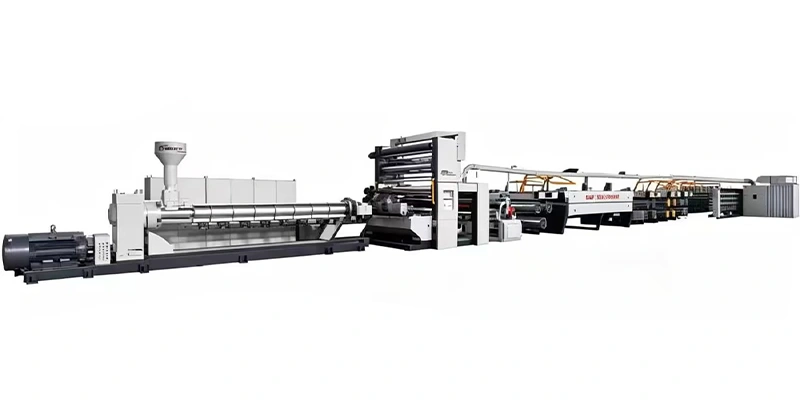
The PP tape extrusion line is the starting point of polypropylene woven fabric production. It converts polypropylene raw materials into flat tapes that can be used in subsequent weaving operations.
During production, PP materials are fed into the extrusion system, melted and extruded through a die, and then processed through cooling, stretching, and winding stages.
The resulting tapes provide the material used by circular looms to produce woven fabric.
Main processing stages:
-
Raw material feeding and mixing
-
Plastic melting and extrusion
-
Film or sheet formation
-
Cooling and stretching
-
Tape slitting
-
Tape winding
Key considerations when selecting a tape extrusion line:
-
Required tape width and thickness
-
Tape tensile properties and consistency
-
Raw material formulation
-
Required production output
-
Winding requirements
-
Compatibility with downstream weaving equipment
Different production requirements may call for different extrusion configurations. The selection should consider the specifications of the final woven fabric rather than production speed alone.
Explore Related Equipment: Plastic Extrusion Tape Line
2.2 Circular Loom for PP Woven Fabric
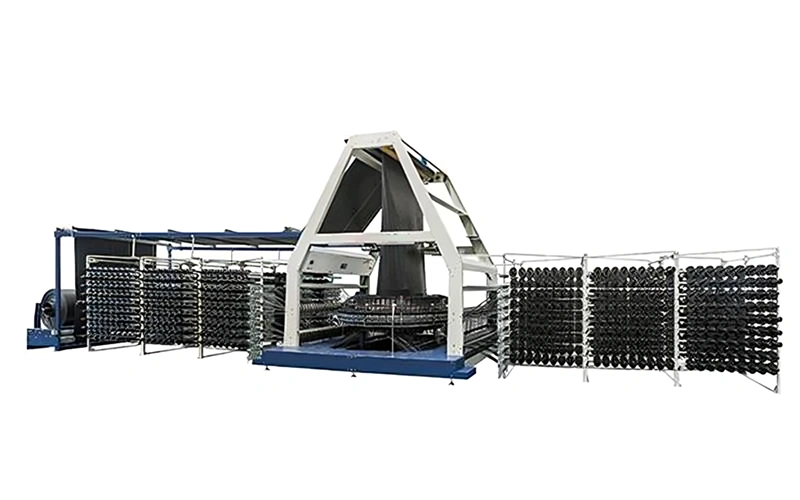
A circular loom converts polypropylene tapes into woven fabric through an interlacing process.
The tapes produced by the extrusion line are supplied to the loom as warp and weft materials. The circular weaving mechanism interlaces these tapes to form tubular woven fabric.
The resulting fabric rolls can then be used directly for certain bag conversion processes or transferred to a lamination stage when additional surface protection is required.
Main functions:
-
Weaving PP tapes into tubular fabric
-
Maintaining consistent fabric construction
-
Producing woven fabric for different bag dimensions
-
Supplying fabric rolls for downstream processing
Key selection considerations:
-
Required fabric width and circumference
-
Weaving density
-
Tape specifications
-
Required fabric quality
-
Production requirements
-
Compatibility with downstream cutting and conversion equipment
Circular loom selection should be based on the dimensions and structural requirements of the finished bags. The fabric width, weaving density, and tape specifications need to be considered together.
Explore Related Equipment: Circular Loom & Knitting Machine
2.3 Plastic Laminating Machine
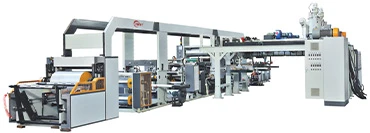
Lamination is an optional process used when the woven fabric requires an additional coating layer.
After weaving, PP woven fabric can be transferred to a laminating machine, where a plastic coating is applied to its surface.
This additional layer can help improve moisture resistance, reduce surface permeability, and provide a more suitable surface for certain packaging applications.
Not all woven bags require lamination. The decision depends on the intended packaging environment, product protection requirements, and final bag construction.
Common reasons for fabric lamination:
-
Improving moisture resistance
-
Reducing water penetration through the fabric structure
-
Providing a coated surface for packaging applications
-
Supporting specific bag finishing requirements
Key selection considerations:
-
Fabric width
-
Required coating material
-
Coating thickness
-
Fabric handling and tension control
-
Required production output
-
Compatibility with downstream bag conversion
For manufacturers producing uncoated woven sacks, this process can be omitted. For laminated woven bags, the laminating machine becomes an additional processing stage between weaving and bag conversion.
Explore Related Equipment: Plastic Laminating Machine
2.4 Plastic Bag Conversion Machine
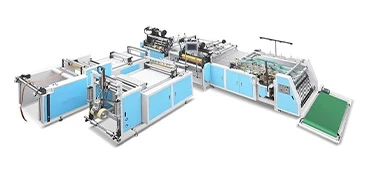
The plastic bag conversion machine transforms woven fabric rolls into finished bags through cutting, sewing, sealing, and other conversion operations, depending on the selected machine configuration.
Both coated and uncoated woven fabric can be processed according to the applicable machine specifications.
The conversion process generally includes:
-
Fabric feeding and unwinding
-
Fabric positioning and length control
-
Bag cutting
-
Bottom sewing or sealing
-
Finished bag collection
The actual processing sequence varies according to bag construction and the required finishing method.
Key selection considerations:
-
Bag length and width
-
Required bag production speed
-
Cutting accuracy
-
Sewing or sealing requirements
-
Bag structure
-
Fabric thickness and coating condition
Different bag types require different conversion arrangements. A standard open-mouth woven sack and a valve bag do not necessarily use the same finishing process.
Explore Related Equipment: Plastic Bag Conversion Machine
2.5 Auxiliary Machines and Supporting Equipment
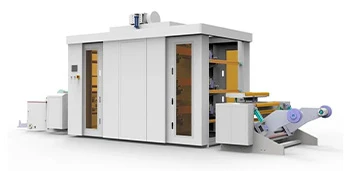
Auxiliary machines support the operation of individual production stages and help manufacturers organize material handling and production processes.
Depending on the selected machinery and production requirements, supporting equipment may be used for:
-
Material feeding and handling
-
Fabric unwinding and rewinding
-
Tape winding
-
Production coordination
-
Supporting downstream processing
Auxiliary equipment should be selected according to the actual requirements of the main machines. It is not necessary to include every auxiliary machine in every production configuration.
Explore Related Equipment: Auxiliary Machine
3. PP Woven Bag Production Processes for Different Bag Types
Different PP woven bags have different structural and functional requirements. These differences directly affect the equipment configuration and the processing stages required.
3.1 Standard PP Woven Bags
Standard PP woven bags are manufactured by weaving polypropylene tapes into fabric and converting the fabric into the required bag dimensions.
Typical production process:
PP Raw Material → Tape Extrusion → Circular Weaving → Cutting → Bottom Sewing → Finished Bags
Main equipment:
-
PP Tape Extrusion Line
-
Circular Loom
-
Plastic Bag Conversion Machine
For this configuration, fabric lamination is not necessarily required. The final process depends on the required bag construction and finishing specifications.
3.2 Laminated PP Woven Bags
Laminated PP woven bags contain an additional coating layer applied to the woven fabric.
This structure is commonly selected when packaging applications require improved moisture resistance or a coated surface.
Typical production process:
PP Raw Material → Tape Extrusion → Circular Weaving → Fabric Lamination → Cutting → Sewing → Finished Bags
Main equipment:
-
PP Tape Extrusion Line
-
Circular Loom
-
Plastic Laminating Machine
-
Plastic Bag Conversion Machine
The lamination stage is added after weaving and before bag conversion. Coating requirements should be confirmed before selecting the laminating equipment.
3.3 PP Woven Bags with Inner Liners
Some packaging applications require an inner liner to provide an additional internal packaging layer.
In this configuration, the woven outer fabric and the inner liner serve different functions. The woven fabric provides the outer bag structure, while the liner provides an additional internal barrier according to the selected material and bag design.
Typical production process:
PP Tape Extrusion → Circular Weaving → Fabric Preparation → Inner Liner Insertion or Integration → Bag Finishing
Main equipment considerations:
-
PP Tape Extrusion Line
-
Circular Loom
-
Bag Conversion Equipment
-
Compatible Inner Liner Feeding or Insertion Arrangement
The exact equipment configuration depends on whether the liner is inserted separately, integrated during bag conversion, or supplied as part of a preassembled bag structure.
Inner liner processing should therefore be confirmed against the actual bag sample and production requirements before determining the machine configuration.
3.4 PP Woven Valve Bags
PP woven valve bags are designed with a filling valve that allows material to be filled through a designated opening.
Compared with standard open-mouth woven bags, valve bags require additional structural and finishing considerations, particularly around the valve construction and filling opening.
Typical production process:
PP Tape Extrusion → Circular Weaving → Optional Lamination → Valve Bag Conversion → Finished Valve Bags
Main equipment considerations:
-
PP Tape Extrusion Line
-
Circular Loom
-
Plastic Laminating Machine, if required
-
Compatible Valve Bag Conversion Equipment
The conversion stage must be selected according to the valve structure, bag dimensions, bottom construction, and required finishing method.
A standard open-mouth bag conversion configuration should not automatically be assumed to support valve bag production.
4. How to Configure a PP Woven Bag Production Line
Selecting equipment for a PP woven bag factory requires more than choosing individual machines. Manufacturers should first define the finished bag specifications and then determine the processing stages needed to achieve them.
4.1 Start with the Finished Bag Specifications
The finished bag determines the requirements of the upstream production processes.
Before selecting equipment, manufacturers should identify:
-
Bag type and construction
-
Finished bag width and length
-
Required fabric structure
-
Fabric coating or lamination requirements
-
Inner liner requirements
-
Valve or open-mouth design
-
Required bag finishing method
These specifications provide the basis for selecting compatible machinery.
4.2 Determine the Required Production Capacity
Production capacity should be evaluated across the entire manufacturing process rather than by looking at one machine in isolation.
For example, a high-output tape extrusion line does not automatically mean that the complete factory can achieve the same finished bag output.
The actual production capacity depends on:
-
Machine operating speed
-
Product specifications
-
Material characteristics
-
Production changeover time
-
Equipment utilization
-
Downstream processing capacity
Manufacturers should coordinate the production requirements of extrusion, weaving, lamination, and bag conversion equipment to avoid unnecessary bottlenecks.
4.3 Match the Equipment to the Required Bag Structure
Different bag structures require different processing arrangements.
| Bag Type | Tape Extrusion | Circular Weaving | Lamination | Bag Conversion |
|---|---|---|---|---|
| Standard woven bag | Required | Required | Optional | Required |
| Laminated woven bag | Required | Required | Required | Required |
| Woven bag with inner liner | Required | Required | Depends on design | Requires compatible liner processing |
| Valve woven bag | Required | Required | Optional | Requires compatible valve bag conversion |
This comparison provides a general manufacturing reference. The final configuration should be confirmed against the actual bag design and machine capabilities.
4.4 Consider Factory Layout and Supporting Requirements
Equipment configuration also affects factory planning.
Manufacturers should evaluate:
-
Available workshop space
-
Material storage and feeding arrangements
-
Machine installation positions
-
Raw material and finished product movement
-
Electrical power requirements
-
Cooling and compressed air requirements, where applicable
-
Equipment maintenance access
-
Operator working areas
A well-planned layout helps maintain an efficient material flow from raw material preparation to finished bag collection.
4.5 Decide Between Individual Machines and a Combined Equipment Configuration
Not every manufacturer needs to purchase all equipment at once.
Some factories already have extrusion or weaving equipment and only need to expand their production capacity through additional machinery.
Others are establishing a new production facility and need to coordinate multiple processing stages.
A practical purchasing approach is to identify existing equipment, determine the missing production stages, and select new machines based on compatibility with the existing production process.
The final equipment combination should reflect the manufacturer's investment plan, production objectives, and product range.
5. Key Information to Prepare Before Purchasing PP Woven Bag Machinery
Providing clear production information helps equipment manufacturers recommend a more suitable configuration and avoid unnecessary equipment selection.
The following information is particularly useful when requesting a quotation.
| Information | Details to Prepare | Why It Matters |
|---|---|---|
| Bag type | Standard, laminated, inner-liner, or valve bag | Determines the required processing stages |
| Bag dimensions | Width, length, and other structural dimensions | Helps determine machine specifications |
| Material | PP resin, additives, coating material, and liner material where applicable | Affects processing requirements |
| Fabric specifications | Fabric width, density, and thickness | Helps select extrusion and weaving equipment |
| Lamination requirements | Coated or uncoated fabric, coating specifications | Determines whether a laminating machine is needed |
| Production target | Required output per shift, day, or month | Helps coordinate equipment capacity |
| Existing equipment | Available extrusion, weaving, and conversion machines | Helps avoid unnecessary equipment investment |
| Factory conditions | Workshop dimensions, electrical supply, and utilities | Supports installation and layout planning |
Recommended Information for a Machinery Inquiry
To help evaluate your project, manufacturers can provide:
-
Photos or samples of the required PP woven bags.
-
Bag dimensions and construction details.
-
Required daily or monthly production output.
-
Raw material and fabric specifications.
-
Whether lamination or inner liners are required.
-
Existing machinery and factory conditions, if applicable.
With these details, the equipment configuration can be evaluated according to the actual production requirements.
6. Frequently Asked Questions About PP Woven Bag Production Lines
6.1 What machines are needed to manufacture PP woven bags?
A typical PP woven bag manufacturing process involves a PP tape extrusion line, circular loom, and bag conversion machine. A plastic laminating machine is added when coated woven fabric is required. Additional supporting equipment depends on the production process and bag structure.
6.2 What is the complete process of PP woven bag manufacturing?
The general process includes raw material preparation, PP tape extrusion, circular weaving, optional fabric lamination, and bag conversion. The final conversion stage includes cutting, sewing, or other finishing operations according to the bag design.
6.3 Is a laminating machine necessary for PP woven bag production?
No. A laminating machine is only necessary when the required woven bags need an additional coating layer. Standard uncoated PP woven bags can proceed from circular weaving directly to bag conversion.
6.4 Can a PP woven bag factory purchase individual machines instead of a complete production line?
Yes. Equipment can be selected according to the factory's existing machinery and production requirements. Manufacturers that already have extrusion or weaving equipment may only need to purchase additional machines for specific processing stages.
Machine compatibility should be evaluated before adding new equipment.
6.5 What is the difference between a circular loom and a PP tape extrusion line?
A PP tape extrusion line produces flat polypropylene tapes from raw materials. A circular loom uses these tapes as weaving materials to manufacture tubular PP woven fabric.
Both machines perform different functions and are generally used in sequence during woven fabric production.
6.6 What equipment is required for laminated PP woven bags?
A typical laminated PP woven bag production process includes a PP tape extrusion line, circular loom, plastic laminating machine, and bag conversion machine.
The lamination stage applies an additional coating layer to the woven fabric before it is converted into finished bags.
6.7 Can the same production line manufacture different PP woven bag types?
Some equipment can be used for multiple bag types, but the complete configuration may need to change according to the bag dimensions, fabric structure, coating requirements, liner construction, and finishing method.
The machine compatibility and required adjustments should be confirmed before production.
6.8 What information is needed to calculate the required production capacity?
Important information includes the required bag dimensions, bag type, fabric specifications, target daily output, working hours, and existing production equipment.
These details help determine the appropriate capacity requirements for each processing stage.
6.9 What is the difference between standard woven bags and valve woven bags?
Standard woven bags generally have an open-mouth structure and are finished through cutting and bottom sewing or other applicable finishing processes.
Valve woven bags include a dedicated filling opening and require a compatible valve construction and conversion arrangement.
Their downstream processing requirements are therefore different.
6.10 How do I choose the right PP woven bag machinery supplier?
Evaluate whether the supplier can provide the required equipment for your manufacturing processes, explain machine compatibility, offer relevant technical specifications, and support equipment selection based on actual bag samples and production requirements.
It is also important to confirm installation requirements, after-sales support, spare parts availability, and the scope of supply before placing an order.
7. Find the Right Equipment for Your PP Woven Bag Manufacturing Project
Building an efficient PP woven bag manufacturing facility starts with understanding the relationship between each production stage.
From PP tape extrusion and circular weaving to optional fabric lamination and final bag conversion, each machine needs to match the material specifications, bag structure, and required production output.
NANYI provides PP woven bag manufacturing machinery covering key processing stages, allowing manufacturers to explore equipment options according to their production requirements.
Whether you are establishing a new woven bag factory, expanding an existing production facility, or upgrading individual processing stages, selecting the right equipment configuration is an important step toward achieving consistent manufacturing results.
Discuss Your PP Woven Bag Production Requirements
Send us your bag samples, product dimensions, material specifications, and target production capacity. Our team can help evaluate the relevant machinery and identify a suitable equipment configuration for your project.
CTA Buttons:
-
Explore Our Products